Why BST Is Essential for Every Seafarer
Why BST Is Essential for Every Seafarer
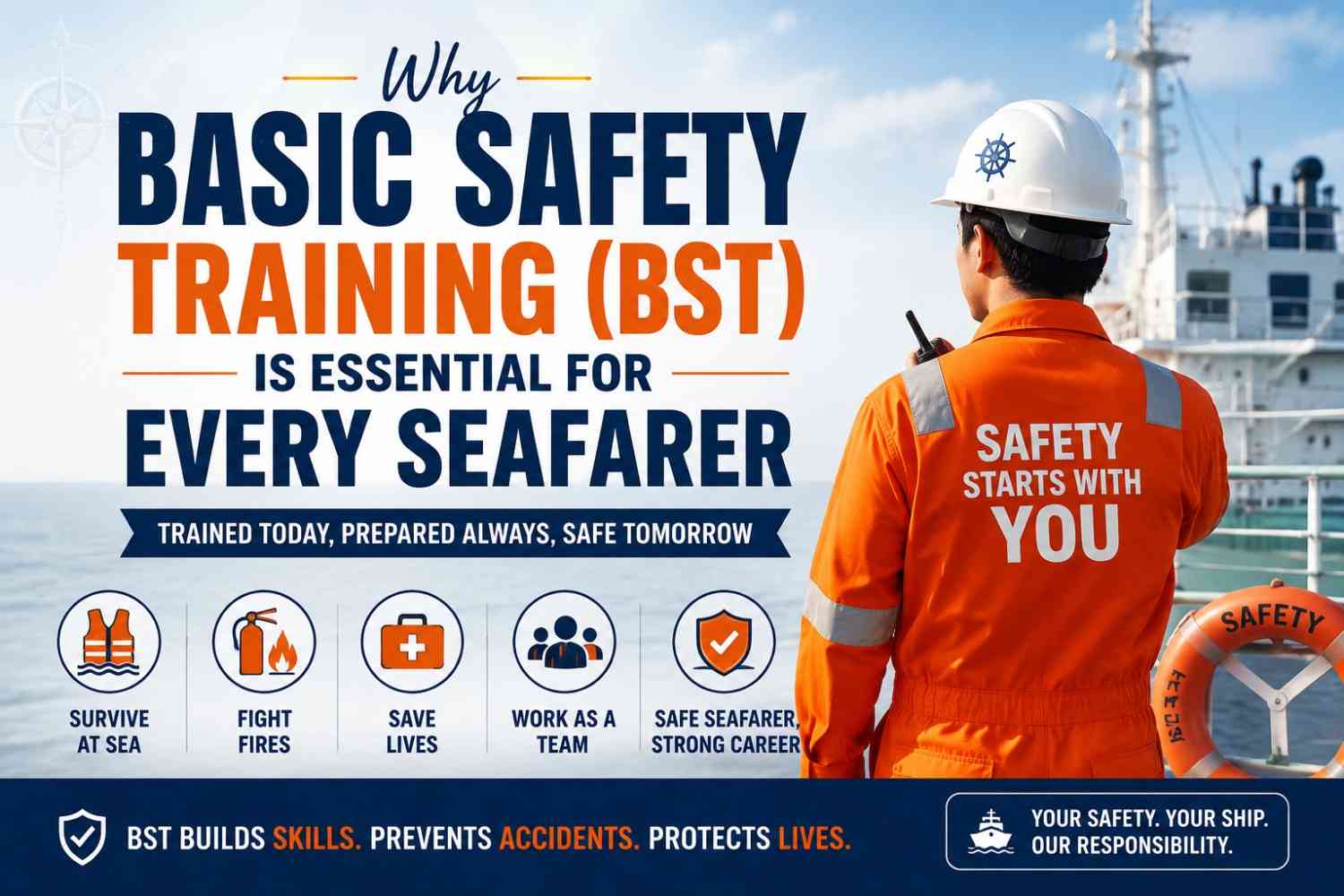
The maritime industry is one of the most challenging and demanding sectors in the world. Seafarers work in unpredictable environments where safety, discipline, and emergency preparedness are critical every single day. This is why Basic Safety Training (BST) plays a vital role in shaping competent and responsible maritime professionals.
For anyone planning to build a career in the merchant navy or shipping industry, BST is not just another certification — it is the foundation of maritime safety and survival at sea.
What Is Basic Safety Training (BST)?
Basic Safety Training, commonly known as BST, is a mandatory maritime training program designed according to the standards of the International Maritime Organization (IMO) under the STCW Convention (Standards of Training, Certification, and Watchkeeping for Seafarers).
The course equips aspiring seafarers with essential safety knowledge and practical skills needed to handle emergencies onboard ships. BST training prepares candidates to respond effectively during dangerous situations such as fires, accidents, flooding, medical emergencies, and abandonment of vessels.
The course is mandatory for individuals who wish to work onboard merchant navy ships, cruise vessels, offshore vessels, and other maritime sectors.
Main Modules Covered in BST Training
BST training includes several important safety-related modules that help seafarers develop confidence and preparedness.
Personal Survival Techniques (PST)
This module teaches candidates how to survive at sea during emergencies. Trainees learn:
-
🔹Life raft operations
-
🔹Survival methods in water
-
🔹Use of life jackets
-
🔹Abandon ship procedures
-
🔹Rescue techniques
Fire Prevention and Fire Fighting (FPFF)
Fire is one of the biggest risks onboard ships. This module trains seafarers in:
-
🔹Fire prevention methods
-
🔹Types of fires and extinguishers
-
🔹Handling fire emergencies
-
🔹Practical firefighting exercises
-
🔹Use of breathing apparatus
Elementary First Aid (EFA)
Medical emergencies can occur anytime at sea. This module provides knowledge about:
-
🔹Basic first aid procedures
-
🔹CPR techniques
-
🔹Treating injuries and burns
-
🔹Emergency medical response
Personal Safety and Social Responsibilities (PSSR)
This module focuses on professional behavior and safe working practices onboard ships, including:
-
🔹Workplace safety
-
🔹Communication and teamwork
-
🔹Pollution prevention
-
🔹Human relationships onboard
-
🔹Emergency procedures
Why Is BST Essential for Every Seafarer?
1. Ensures Safety at Sea
Safety is the top priority in the maritime industry. Ships operate in isolated and sometimes dangerous conditions where immediate external help may not be available. BST helps seafarers react quickly and effectively during emergencies, reducing risks to life and property.
2. Mandatory Requirement for Maritime Careers
Without BST certification, candidates cannot begin their professional journey at sea. It is one of the first mandatory certifications required for joining merchant navy vessels and many maritime-related jobs.
Whether someone wants to become a deck officer, marine engineer, ETO, or crew member, BST is the starting point.
3. Builds Confidence During Emergencies
Emergencies at sea can create panic if crew members are unprepared. BST training gives seafarers hands-on practical experience that helps them remain calm and take proper action during critical situations.
This confidence can save lives during real onboard emergencies.
4. Develops Teamwork and Discipline
Life onboard a ship requires strong coordination among crew members from different backgrounds and nationalities. BST teaches teamwork, communication, discipline, and responsibility, which are essential qualities for successful seafarers.
5. Improves Employment Opportunities
Shipping companies prefer trained and safety-conscious candidates. Completing BST training improves employability and demonstrates that a candidate understands international maritime safety standards.
It also creates a strong first impression during maritime job interviews.
6. Helps Prevent Accidents and Pollution
BST not only focuses on personal safety but also on protecting the marine environment. Seafarers learn safe working practices and pollution prevention measures that help reduce accidents and environmental damage.
Practical Training Makes BST Highly Valuable
One of the biggest advantages of BST training is its practical nature. Candidates do not simply study theory — they actively participate in:
-
🔹Firefighting drills
-
🔹Swimming and survival exercises
-
🔹Emergency response simulations
-
🔹First aid practice sessions
This hands-on training prepares them for real-life situations onboard ships.
Who Should Take the BST Course?
BST training is suitable for:
-
🔹Merchant Navy aspirants
-
🔹Deck cadets
-
🔹Marine engineering students
-
🔹Cruise ship career aspirants
-
🔹Offshore industry candidates
-
🔹Anyone planning to work onboard ships
Freshers entering the maritime industry usually complete BST before joining their first vessel.
Career Benefits of BST Certification
Completing BST training opens doors to multiple maritime career opportunities, including:
-
🔹Merchant Navy
-
🔹Cruise ships
-
🔹Cargo vessels
-
🔹Offshore oil and gas sector
-
🔹Maritime logistics support
-
🔹International shipping companies
It also acts as a stepping stone toward advanced maritime certifications and career growth.
Final Thoughts
Basic Safety Training is far more than a mandatory maritime course. It is a life-saving training program that prepares seafarers to face the realities of working at sea. From firefighting and survival techniques to first aid and teamwork, BST builds the core skills every maritime professional needs.
For aspiring seafarers, completing BST training is the first major step toward a safe, successful, and professional maritime career. In an industry where safety can never be compromised, BST remains an essential foundation for every seafarer stepping onboard a vessel.