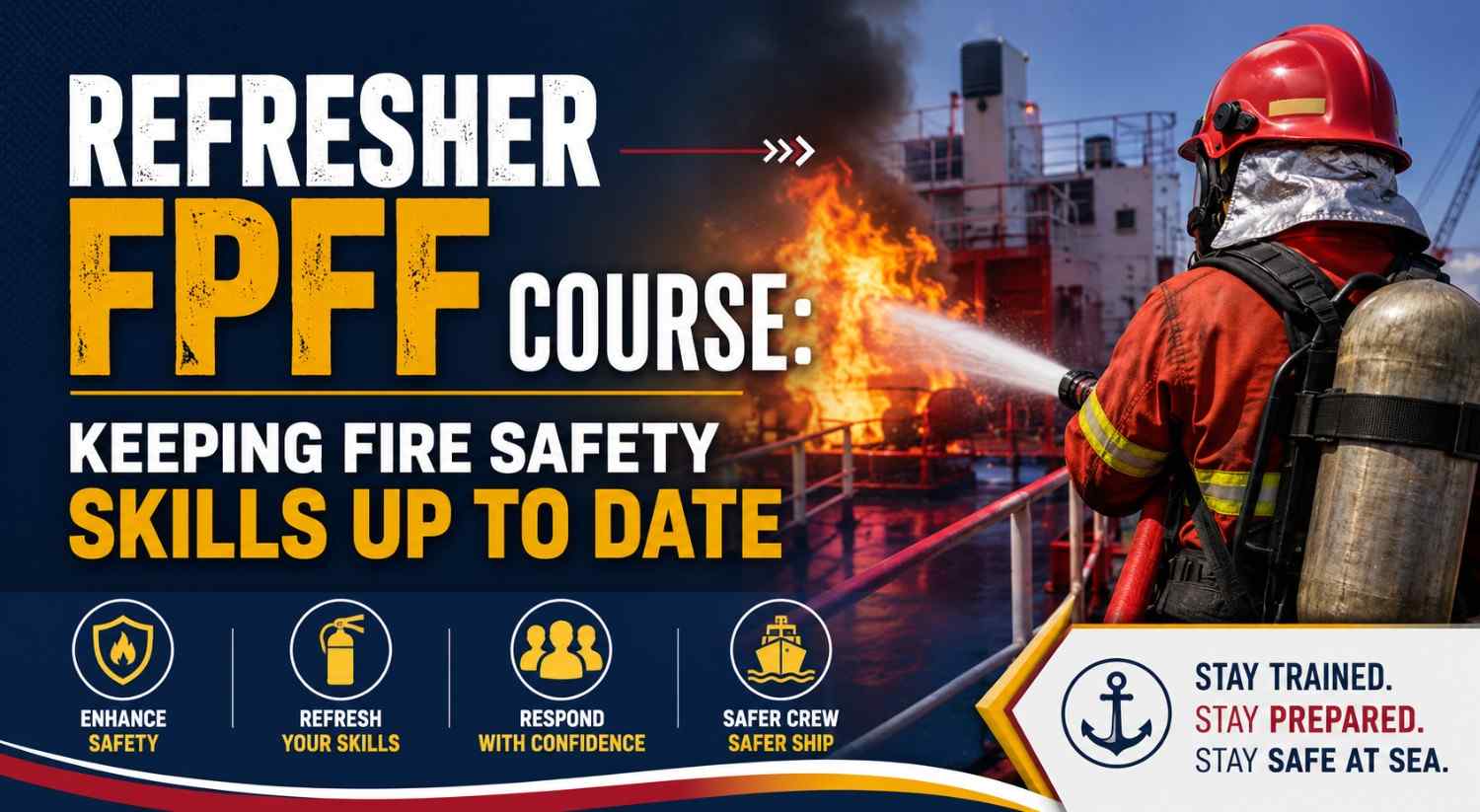
Refresher FPFF Course- Keeping Fire Safety Skills Up to Date
Refresher FPFF Course- Keeping Fire Safety Skills Up to Date
The maritime industry operates in an environment where safety is not just a requirement—it is a responsibility. Among the many risks faced by seafarers, fire remains one of the most serious threats onboard a vessel. A small fire can quickly escalate into a major emergency, putting lives, cargo, and the ship itself at risk. This is why proper fire prevention and firefighting training is essential for every maritime professional.
The Refresher FPFF (Fire Prevention and Fire Fighting) Course plays a vital role in ensuring that seafarers maintain their competency and remain prepared to respond effectively to fire emergencies. As technologies, regulations, and onboard equipment continue to evolve, refresher training helps crew members stay updated with the latest fire safety practices and emergency response procedures.
What Is the Refresher FPFF Course?
The Refresher FPFF Course is designed for seafarers who have previously completed the Fire Prevention and Fire Fighting training and need to renew their certification in accordance with STCW (Standards of Training, Certification and Watchkeeping for Seafarers) requirements.
The course focuses on refreshing the knowledge and practical skills needed to prevent, detect, and combat fires onboard ships. Through a combination of theoretical instruction and hands-on exercises, participants gain renewed confidence in handling fire-related emergencies.
Why Is Refresher FPFF Training Important?
Fire safety skills can diminish over time if they are not regularly practiced. Even experienced seafarers may find it challenging to respond effectively during a real emergency without periodic training.
1. Maintaining Competency
Maritime emergencies demand quick thinking and decisive action. Refresher training ensures that seafarers remain competent in fire prevention techniques, firefighting procedures, and emergency response strategies.
2. Compliance with STCW Regulations
International maritime regulations require seafarers to periodically update their safety training. Completing a Refresher FPFF Course helps crew members maintain valid certification and remain eligible for employment onboard vessels.
3. Enhancing Onboard Safety
Well-trained crew members contribute significantly to a safer working environment. Refresher training reinforces safety awareness and helps reduce the likelihood of fire incidents at sea.
4. Building Confidence During Emergencies
Emergency situations can be stressful and unpredictable. Regular training allows seafarers to practice critical firefighting skills, helping them respond with confidence when real-life incidents occur.
Common Causes of Fires on Ships
Understanding fire hazards is one of the most effective ways to prevent onboard incidents. Some common causes of shipboard fires include:
-
🔹Electrical faults and equipment failures
-
🔹Fuel and oil leaks
-
🔹Improper handling of flammable materials
-
🔹Engine room overheating
-
🔹Hot work activities such as welding and cutting
-
🔹Galley and cooking-related accidents
-
🔹Poor housekeeping practices
The Refresher FPFF Course helps participants identify these risks and implement preventive measures to minimize potential fire hazards.
Key Topics Covered in a Refresher FPFF Course
The course is designed to provide a comprehensive review of essential fire safety knowledge and practical firefighting techniques.
Fire Prevention Principles
Participants learn how to identify potential fire risks, conduct safety inspections, and apply preventive measures to reduce the chances of fire outbreaks onboard.
Fire Detection and Alarm Systems
Early detection is critical in controlling fires before they spread. The training covers various fire detection methods, alarm systems, and emergency communication procedures.
Firefighting Equipment
Seafarers receive hands-on training with equipment commonly used onboard ships, including:
-
🔹Portable fire extinguishers
-
🔹Fire hoses and nozzles
-
🔹Breathing apparatus
-
🔹Fireman's outfits
-
🔹Fixed firefighting systems
Understanding the proper use and limitations of each piece of equipment is crucial for effective firefighting operations.
Emergency Response Procedures
The course reviews emergency protocols, including:
-
🔹Raising alarms
-
🔹Evacuation procedures
-
🔹Fire team organization
-
🔹Communication during emergencies
-
🔹Boundary cooling techniques
-
🔹Search and rescue operations
Practical Firefighting Exercises
One of the most valuable aspects of the Refresher FPFF Course is the practical training component. Participants engage in realistic firefighting scenarios that simulate actual onboard emergencies, allowing them to apply their knowledge in controlled conditions.
Benefits of Completing a Refresher FPFF Course
Improved Safety Awareness
The training helps seafarers remain alert to potential fire hazards and reinforces the importance of maintaining a safe work environment.
Better Emergency Preparedness
Crew members who undergo refresher training are better prepared to handle emergencies quickly and efficiently, minimizing damage and protecting lives.
Regulatory Compliance
Maintaining valid certification ensures compliance with international maritime standards and company requirements.
Enhanced Career Opportunities
Shipping companies prefer crew members who maintain up-to-date certifications and demonstrate a strong commitment to safety. Completing a Refresher FPFF Course can improve employability and career progression within the maritime industry.
Increased Team Coordination
Firefighting onboard a vessel requires teamwork. Refresher training strengthens communication and coordination among crew members, leading to more effective emergency responses.
Who Should Attend the Refresher FPFF Course?
The course is intended for seafarers who have previously completed the Fire Prevention and Fire Fighting training and need to renew their certification to meet STCW requirements.
This includes:
-
🔹Deck Officers
-
🔹Engine Officers
-
🔹Ratings
-
🔹Cadets
-
🔹Other maritime personnel serving onboard ships
Seafarers should ensure that their certification remains valid to avoid disruptions in employment or sailing opportunities.
How Refresher Training Supports Maritime Safety Culture
A strong safety culture is essential in the maritime industry. Refresher FPFF training encourages continuous learning and reinforces the idea that safety is everyone's responsibility.
When crew members regularly update their skills, they become more proactive in identifying hazards, reporting safety concerns, and following established procedures. This contributes to a safer working environment for everyone onboard.
Choosing the Right Maritime Training Institute
When selecting a Refresher FPFF Course provider, consider factors such as:
-
🔹Approval by relevant maritime authorities
-
🔹Experienced instructors
-
🔹Modern training facilities
-
🔹Practical firefighting simulations
-
🔹Compliance with STCW standards
Quality training ensures that participants gain both the knowledge and practical experience necessary to respond effectively to fire emergencies.
Conclusion
Fire remains one of the most significant hazards in the maritime industry, making continuous training essential for every seafarer. The Refresher FPFF Course helps maritime professionals maintain critical fire prevention and firefighting skills, comply with STCW regulations, and enhance overall onboard safety.
By regularly updating their knowledge and participating in practical exercises, seafarers can respond confidently during emergencies, protect lives and assets, and contribute to a stronger safety culture at sea. Investing in a Refresher FPFF Course is not just about renewing a certificate—it is about staying prepared, competent, and committed to maritime safety.