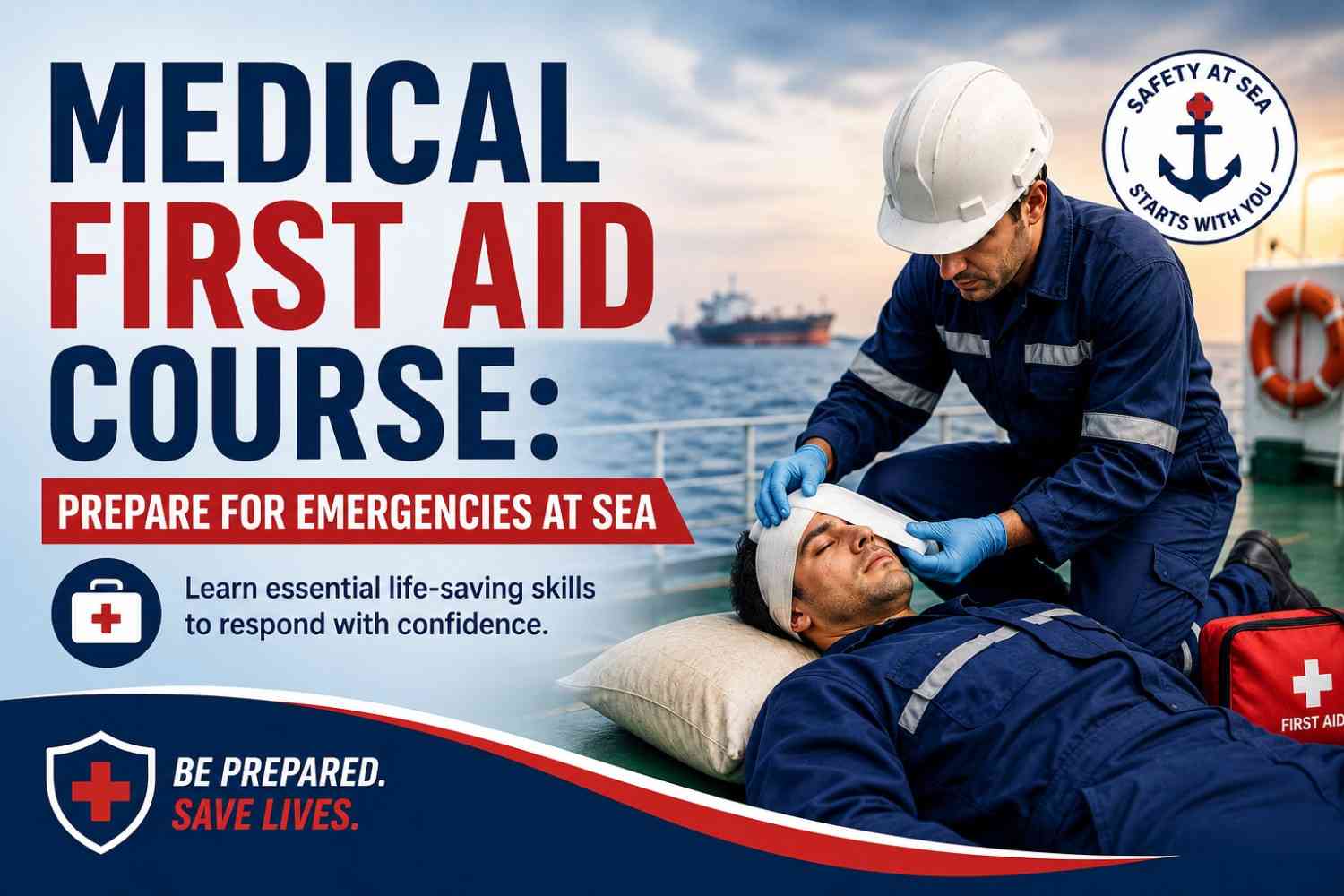
Medical First Aid Course - Prepare for Emergencies at Sea
Medical First Aid Course - Prepare for Emergencies at Sea
Working at sea comes with unique challenges, and one of the most critical is handling medical emergencies when professional healthcare is not immediately available. Whether it's an injury, sudden illness, burns, fractures, or a life-threatening emergency, the ability to provide immediate medical assistance can make a significant difference.
A Medical First Aid Course equips seafarers with the essential knowledge and practical skills needed to respond effectively to onboard medical emergencies. It is a mandatory training program for many maritime professionals and plays a vital role in ensuring the safety and well-being of everyone on board.
If you're planning a career in the merchant navy or are already working at sea, here's everything you need to know about the importance of a MFA Course.
Why is a Medical First Aid Course Important?
Unlike emergencies on land, ships may be days away from the nearest medical facility. During this time, crew members are responsible for providing immediate care to the injured or ill person.
A Medical First Aid Course helps participants:
-
🔹 Respond confidently during medical emergencies.
-
🔹 Stabilize casualties until medical assistance is available.
-
🔹 Prevent injuries from becoming more serious.
-
🔹 Improve onboard safety and emergency preparedness.
-
🔹 Meet international maritime training requirements.
Having trained personnel onboard can significantly improve the outcome of medical emergencies.
What is a Medical First Aid Course?
A Medical First Aid Course is an STCW-compliant maritime training program that teaches seafarers how to provide first aid in emergency situations. The course combines classroom learning with practical training, enabling participants to handle a variety of medical incidents that may occur onboard ships.
The training focuses on recognizing medical emergencies, providing immediate treatment, and communicating effectively with medical professionals when necessary.
What Will You Learn?
A comprehensive Medical First Aid Course covers a wide range of emergency response skills, including:
Patient Assessment
Participants learn how to assess an injured or ill person by checking consciousness, breathing, pulse, and other vital signs. Correct assessment helps determine the appropriate first aid response.
CPR and Life-Saving Techniques
Cardiopulmonary Resuscitation (CPR) is one of the most important skills taught during the course. Participants practice chest compressions, rescue breathing, and recovery techniques that can help save lives during cardiac emergencies.
Treating Wounds and Bleeding
The course explains how to control bleeding, clean wounds, apply dressings, and reduce the risk of infection.
Managing Fractures and Burns
Seafarers learn safe methods of handling fractures, sprains, dislocations, and different types of burns, including thermal, chemical, and electrical burns.
Handling Medical Emergencies
The Medical First Aid Course also covers common onboard emergencies such as heart attacks, strokes, asthma attacks, seizures, allergic reactions, diabetic emergencies, and shock. Participants learn how to recognize symptoms early and provide immediate care until advanced medical support becomes available.
Practical Training Makes the Difference
One of the biggest advantages of a Medical First Aid Course is its emphasis on practical learning.
Participants gain hands-on experience through:
-
🔹 CPR practice sessions.
-
🔹 Emergency response simulations.
-
🔹 Bandaging exercises.
-
🔹 Splinting techniques.
-
🔹 Mock onboard emergency scenarios.
This practical approach helps build confidence and prepares seafarers to respond effectively in real-life situations.
Who Should Take a Medical First Aid Course?
This course is suitable for:
-
🔹 Merchant Navy aspirants
-
🔹 Deck and Engine Cadets
-
🔹 Officers and Crew Members
-
🔹 Maritime professionals renewing STCW certifications
-
🔹 Anyone planning a career in the maritime industry
For many onboard positions, a valid Medical First Aid Course certificate is a mandatory requirement.
Benefits of Completing the Course
Enrolling in a Medical First Aid Course offers several advantages beyond meeting certification requirements.
🔹 Improves Emergency Response Skills: Participants develop the ability to remain calm and take appropriate action during critical situations.
🔹 Enhances Career Opportunities: Shipping companies value crew members who possess internationally recognized safety certifications.
🔹 Promotes Onboard Safety: Trained personnel contribute to a safer working environment and improve the overall emergency preparedness.
🔹 Builds Confidence: Practical training helps participants respond effectively without hesitation during medical emergencies.
Why Choose Professional MFA Training?
Medical emergencies at sea require quick decision-making and practical skills. Professional training ensures that participants are prepared to manage real-life situations using internationally accepted first aid procedures.
A quality Medical First Aid Course not only helps you earn a recognized certification but also equips you with life-saving skills that can protect your fellow crew members when every second counts.
Conclusion
A Medical First Aid Course is far more than a mandatory certification—it's a life-saving skill that every seafarer should possess. From handling injuries and burns to performing CPR and managing medical emergencies, the training prepares you to respond confidently when every second matters.
Whether you're starting your maritime career or upgrading your STCW qualifications, investing in a Medical First Aid Course is an investment in safety, professionalism, and career growth. The knowledge you gain can protect your fellow crew members, enhance your employability, and help create a safer working environment at sea.
If you're ready to build essential emergency response skills and meet international maritime standards, enrolling in a Medical First Aid Course is the next step toward a successful and responsible career at sea.